


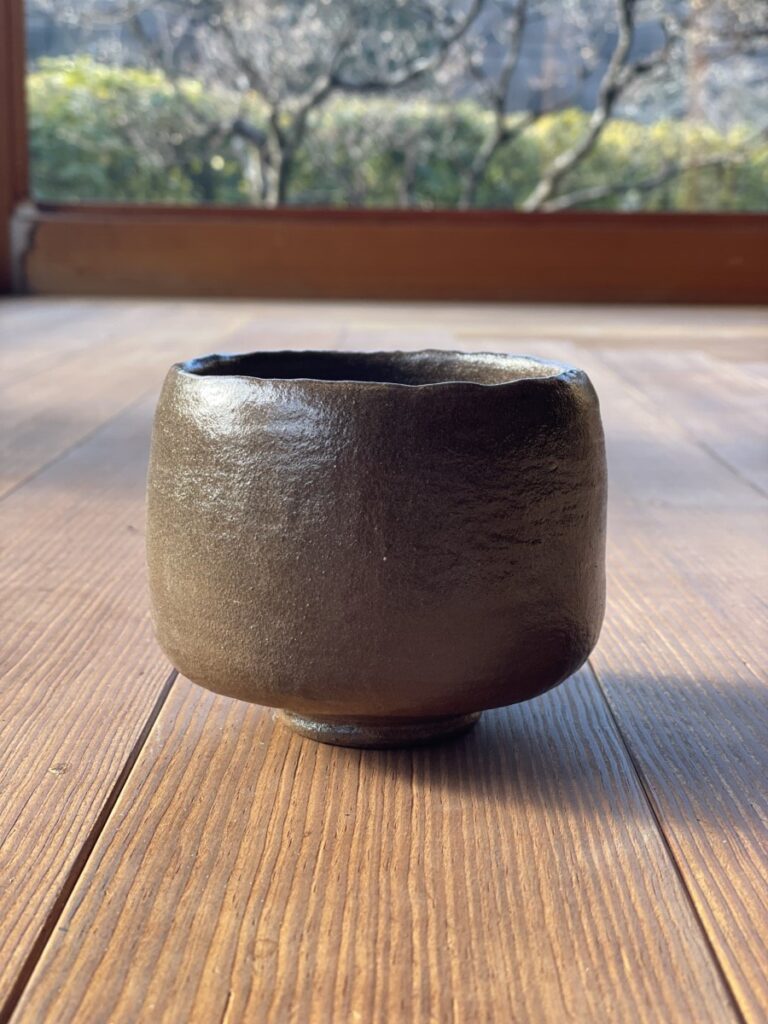
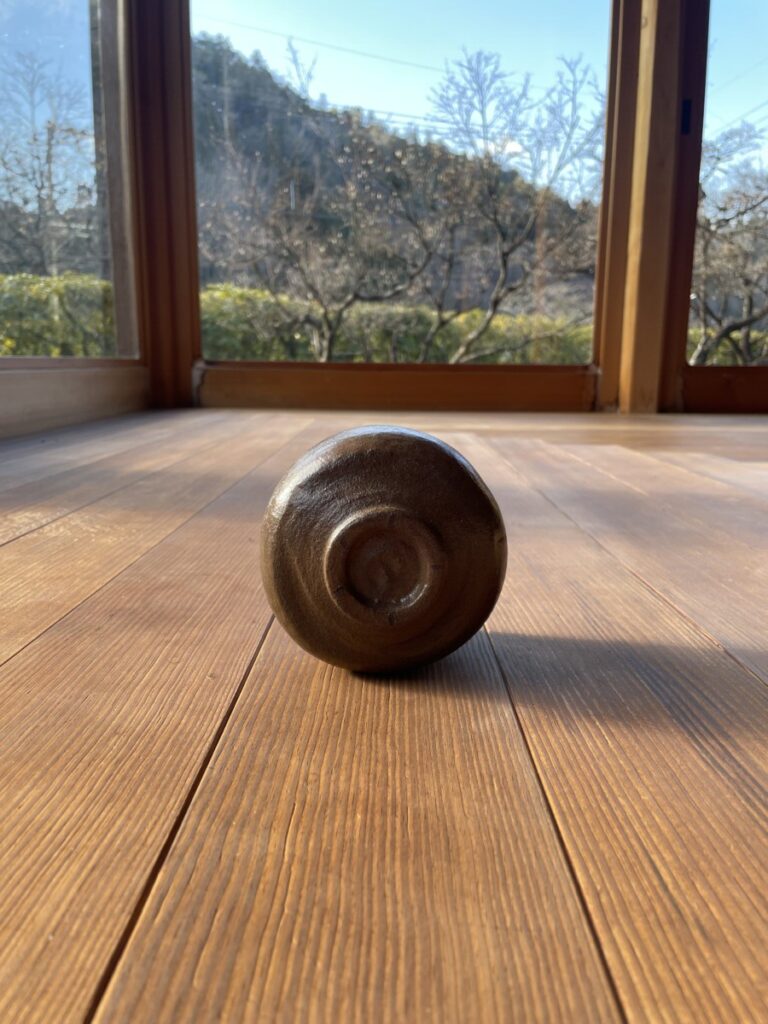
この茶碗は、千利休が所持していたと伝えられ、のちに山田宗偏へと受け継がれました。
その後、坂本周斎の手を経て、最終的に表千家へ戻ったとされています。現在も、不審菴を代表する第一級の名碗として大切に伝えられています。
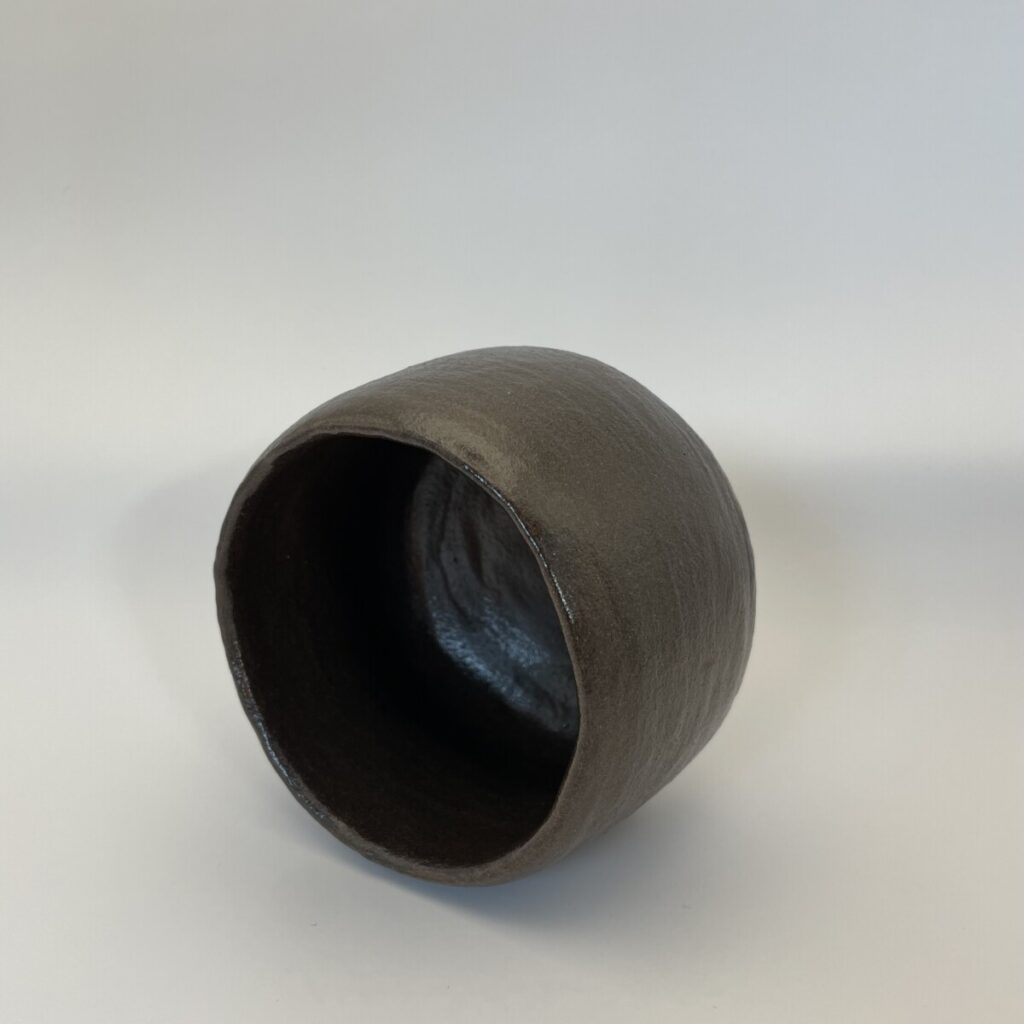
利休が常に身近に置き、最も愛用した茶碗であったことから、「禿」という銘が付けられました。
高台まわりの底部が欠けたため、漆による小さな繕いの跡が残っています。
作行きは全体に滑らかで、無駄のない削りが施されており、「禿」という銘にふさわしい、穏やかで親しみ深い趣があります。口縁はわずかに波打ち、内側へしっかりと抱え込む形をしています。
高台は大ぶりで力強く、渦巻状の兜巾は見られません。見込みには浅い茶溜りがあり、広々とした印象を与えます。
釉調は滑らかな枯れ肌で、黄褐色のまだらな景色が全体にあらわれています。
不審菴蔵。
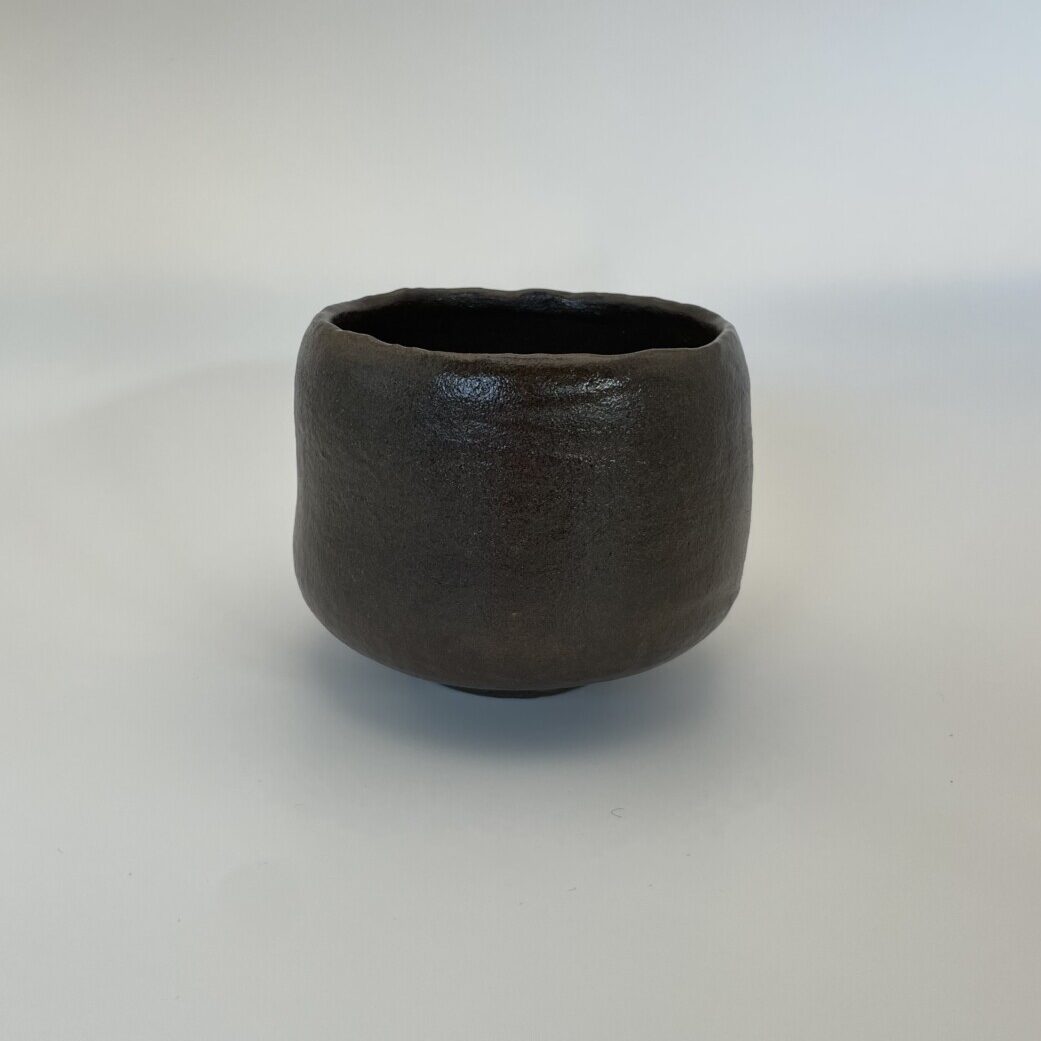
Black Raku Tea Bowl “Kamuro” by Chōjirō
A Masterpiece Associated with Sen no Rikyū
The black Raku tea bowl “Kamuro” is an exceptional work by Chōjirō, the founder of Raku ware and one of the most influential figures in the history of Japanese tea ceremony ceramics. This bowl is traditionally believed to have been owned and treasured by Sen no Rikyū, the tea master who established the spiritual and aesthetic foundations of chanoyu.
According to historical tradition, the bowl was passed down from Sen no Rikyū to Yamada Sōhen, later through Sakamoto Shūsai, and eventually returned to the Omotesenke school of tea. Today, it is carefully preserved at Fushin’an, the Omotesenke headquarters, where it is regarded as one of the most important and representative Raku tea bowls in the collection.
Rikyū is said to have kept this bowl constantly at his side, favoring it above all others for daily use. Because of this close relationship, the bowl was given the name “Kamuro,” a word referring to youthful attendants and suggesting intimacy, gentleness, and quiet companionship. At some point, the base near the foot ring was chipped, and a small lacquer repair remains—an honest trace of long use that reflects the Japanese aesthetic of wabi-sabi.
The form of the bowl is smooth and understated, with economical carving and no unnecessary excess. The rim undulates subtly and turns inward with a firm, embracing shape. The foot ring is notably large and powerful, and unlike some Raku works, it does not feature a spiral tokin carving. Inside, a shallow tea pool spreads broadly, creating a calm and open visual impression when tea is prepared.
The glaze surface displays a softly weathered texture characteristic of early Raku ware, with mottled yellow-brown tones emerging across the black ground. This subtle variation adds depth and warmth, enhancing the bowl’s serene presence.
The tea bowl “Kamuro” stands as a timeless embodiment of Raku ceramics, Sen no Rikyū’s tea philosophy, and the enduring beauty of Japanese tea culture.
Collection of Fushin’an (Omotesenke).