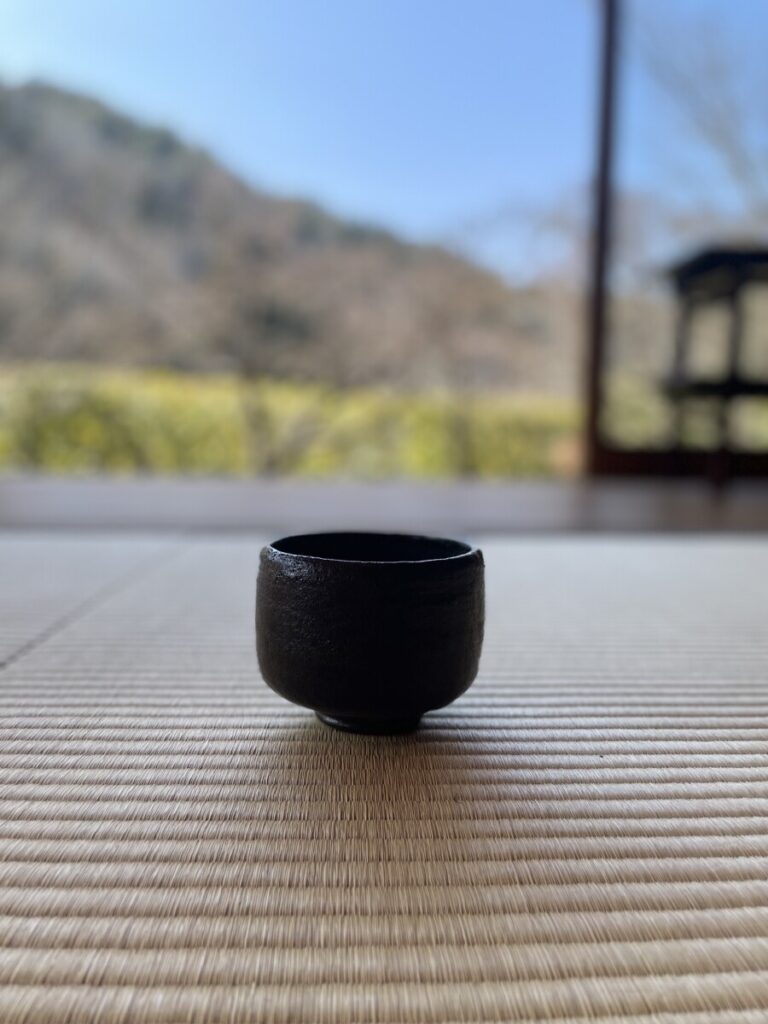
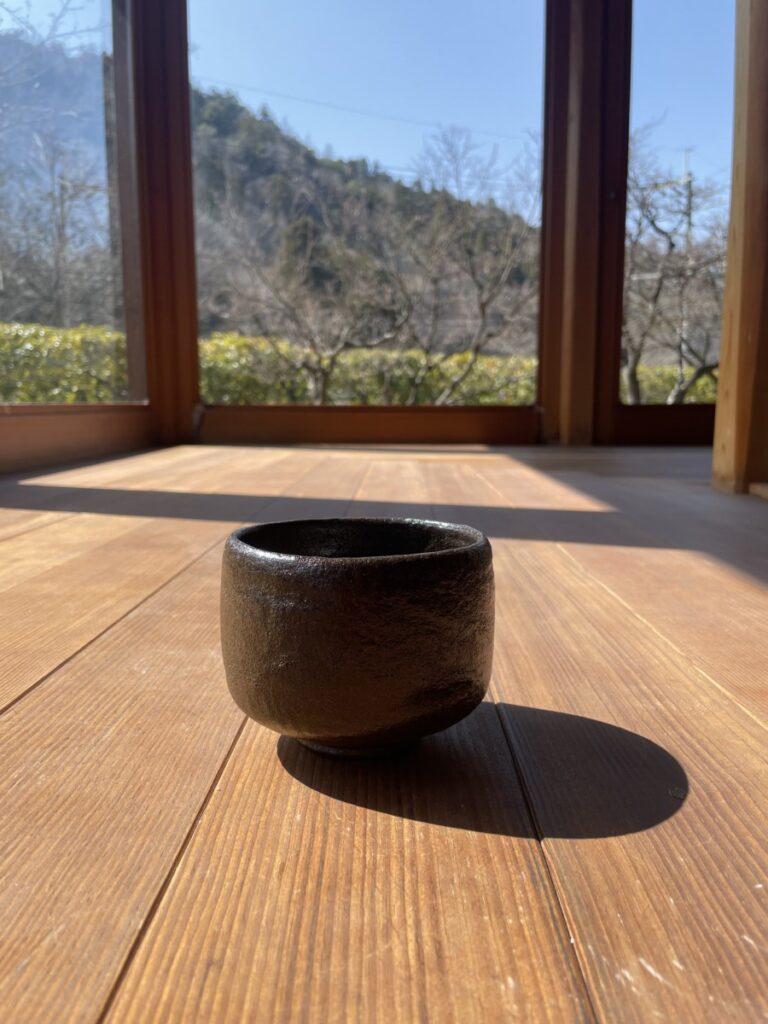
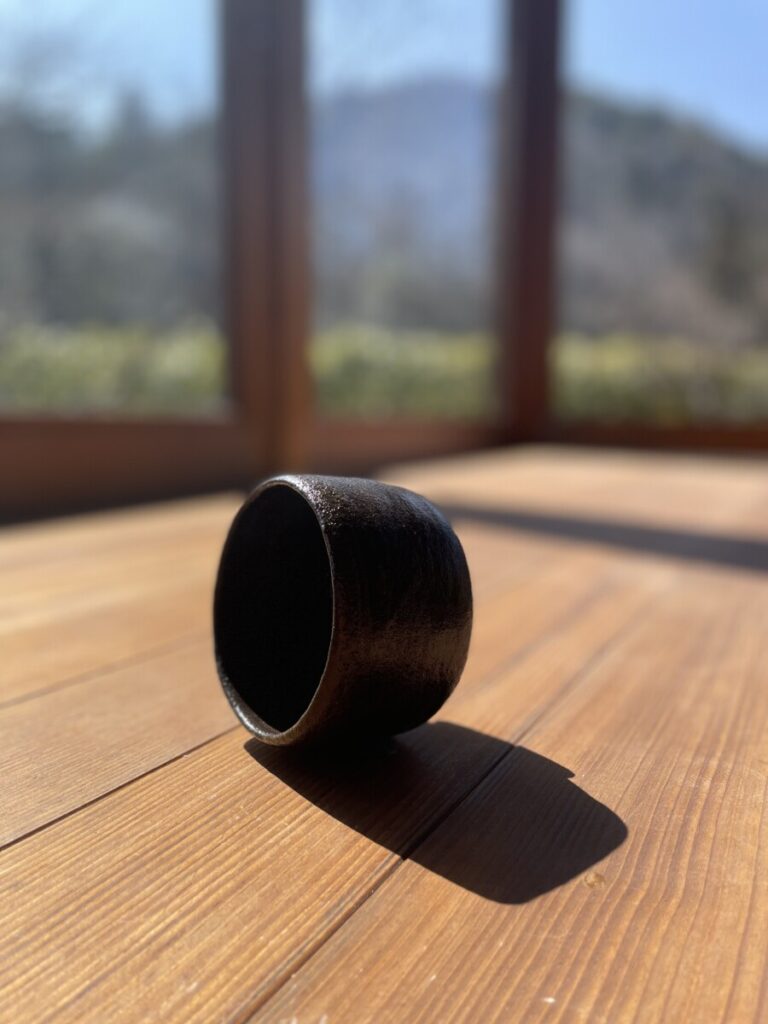
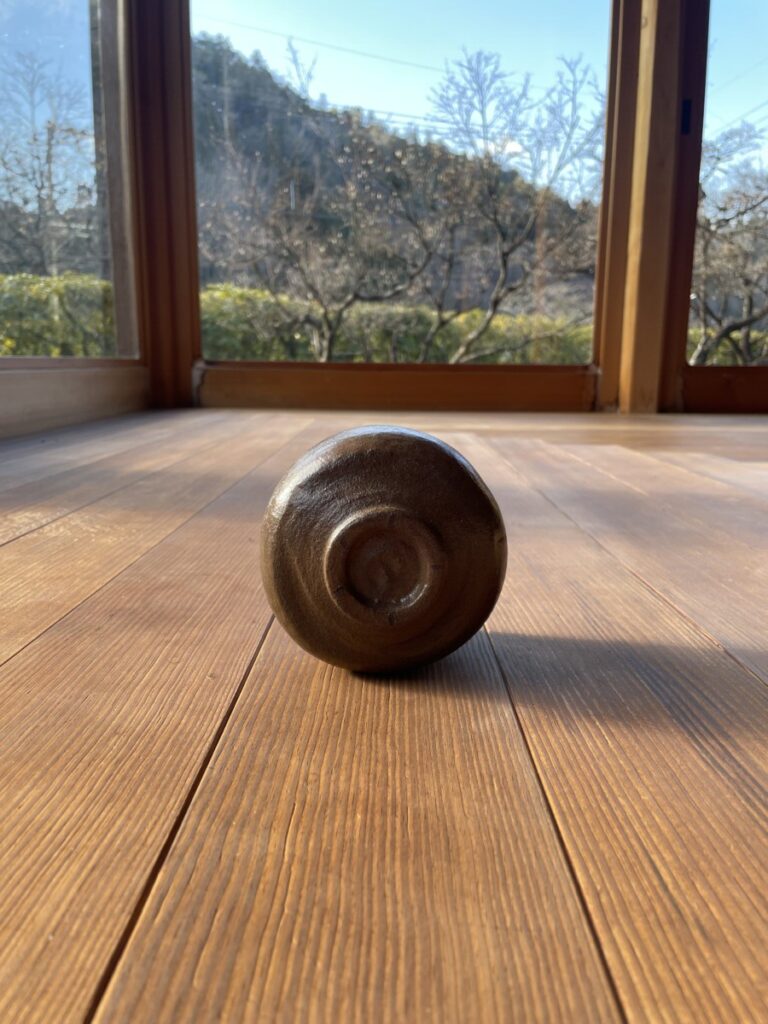
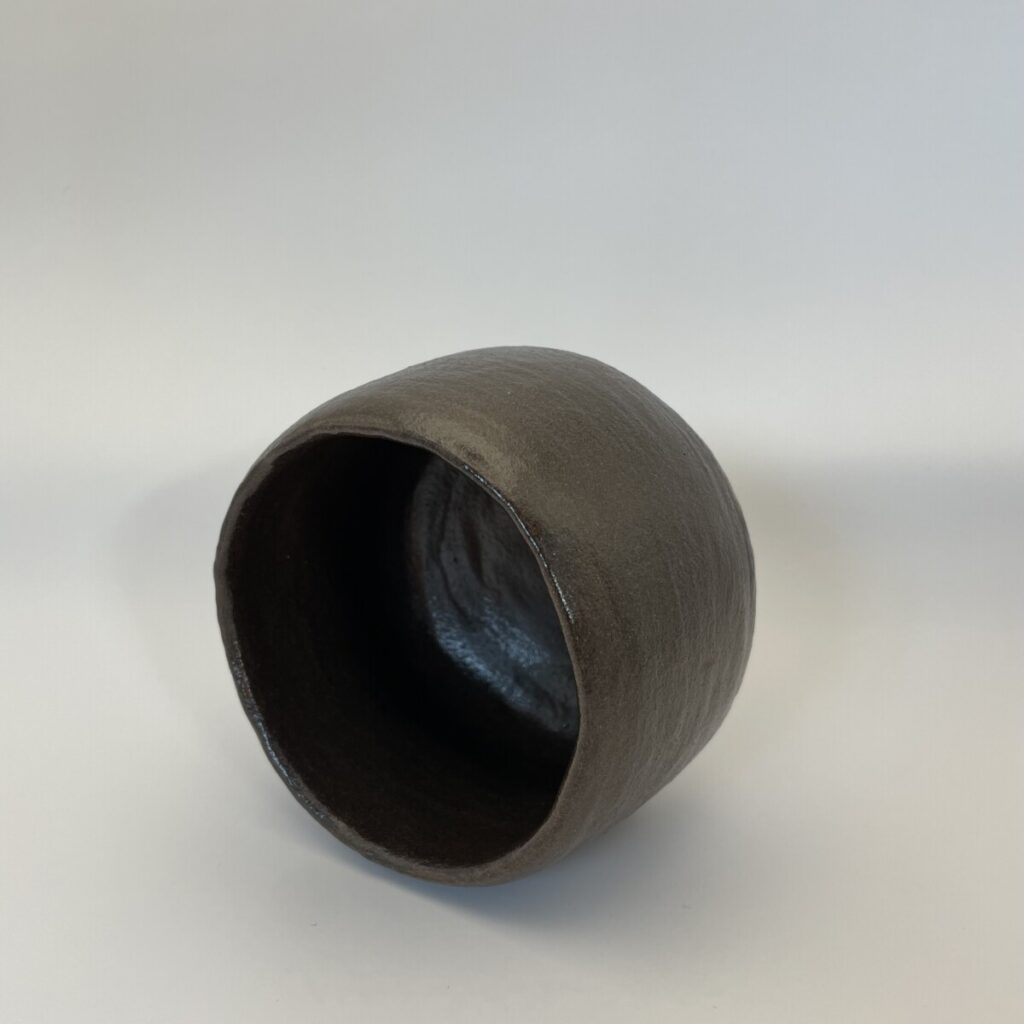
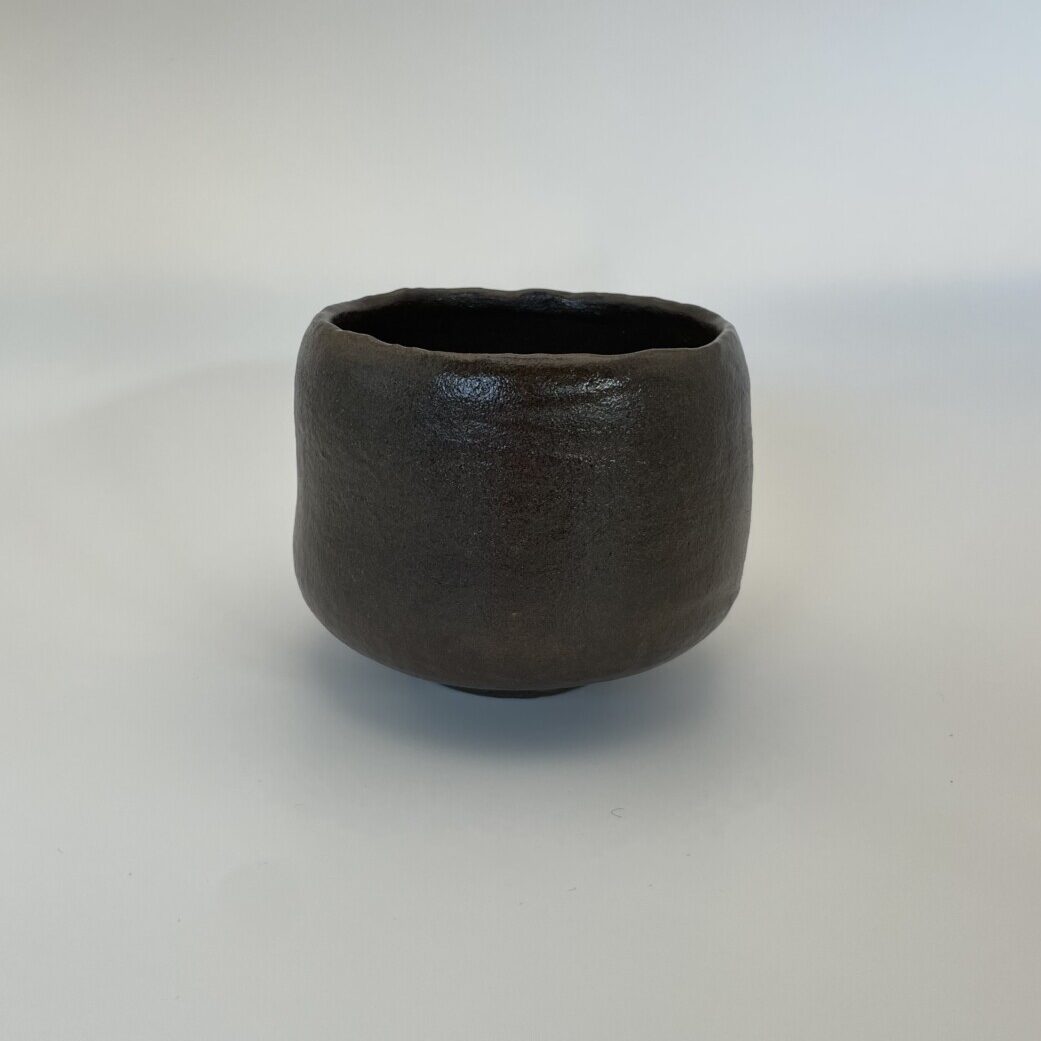
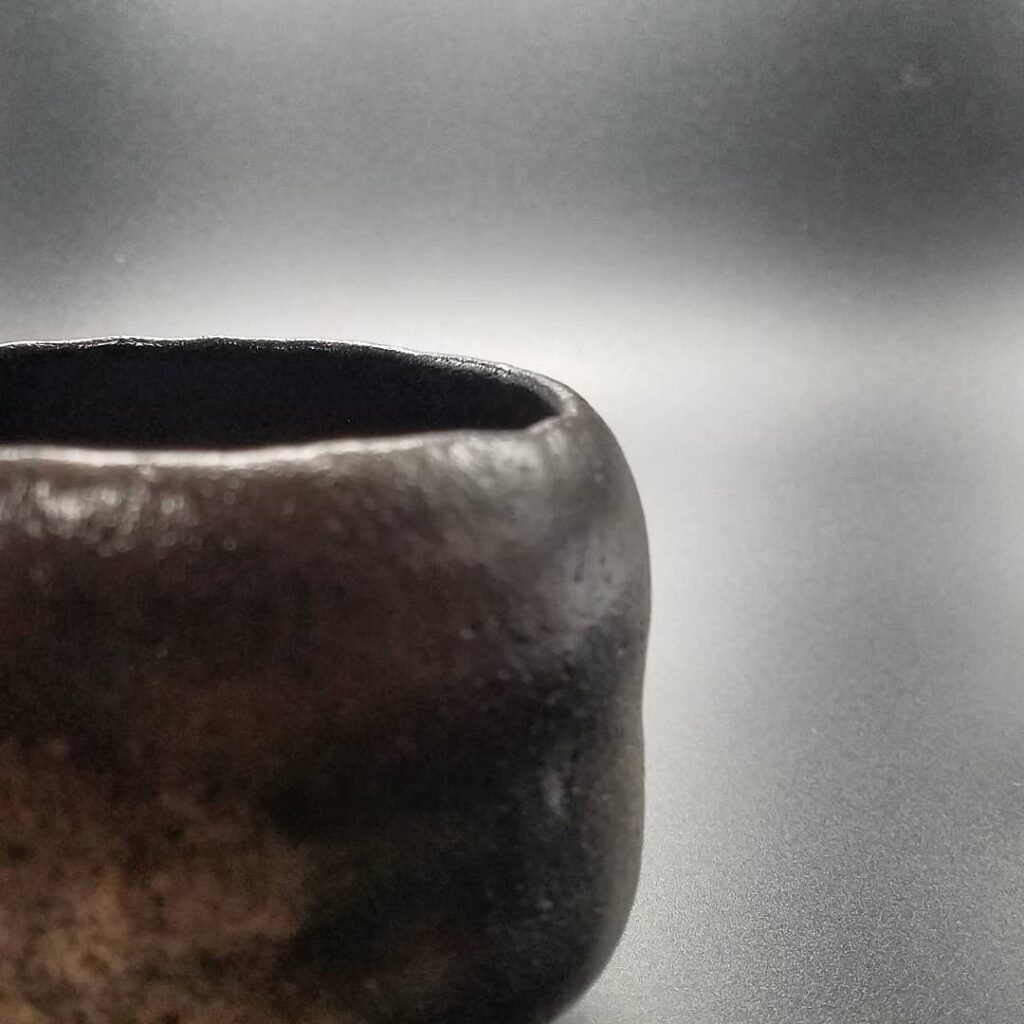
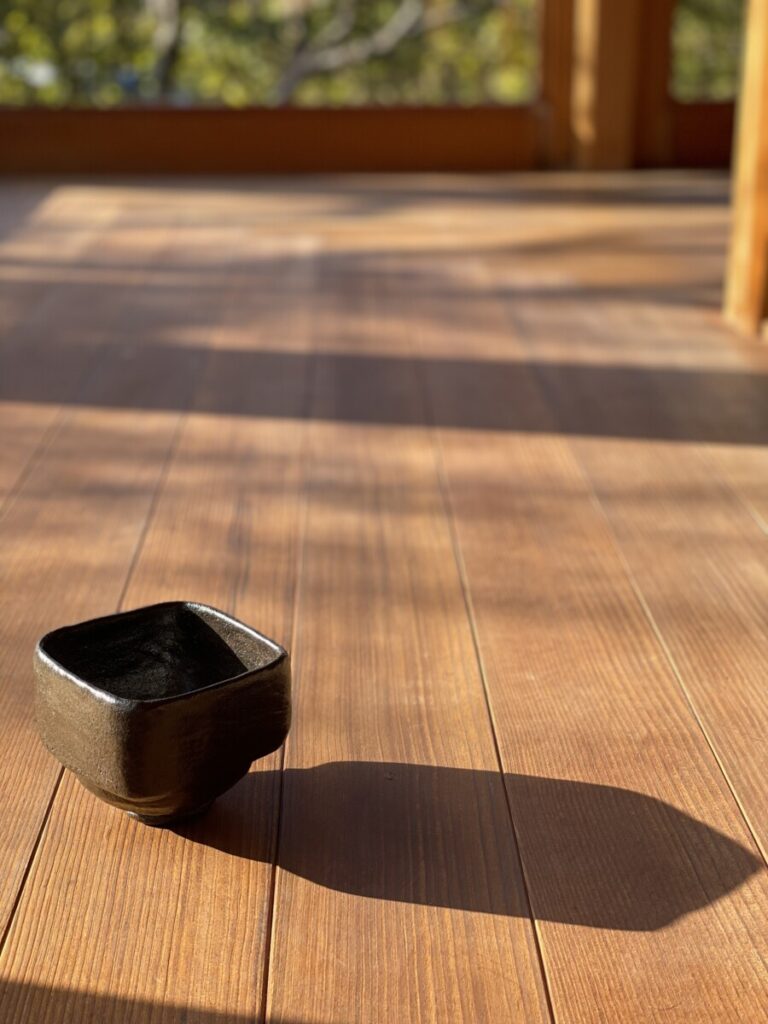
The black tea bowl “Ooguro,” made by Chōjirō, is an exceptional masterpiece with an unusually well-documented history of ownership. On the inside lid of the inner box, Kōshin Sōsa, the 4th head of the Omotesenke school, wrote in vermilion ink: “Ooguro – Owned by Rikyū – Passed to Shōan – Then to Sōtan – From Gotō Kosai to Sōsa.” On the outer box lid, the 9th head, Zuiryūsai Sōsa, inscribed the words “Rikyū Ooguro.” These inscriptions clearly show that the bowl was first owned by Sen no Rikyū,then passed to his son Shōan,and subsequently to Shōan’s son Sōtan. It was temporarily held by Sōtan’s disciple Gotō Kosai,but later returned to the Sen family during the era of Kōshin Sōsa. The bowl remained highly valued within the Omotesenke tradition until the time of Joshinsai. Afterward, it entered the collection of the prominent Osaka merchant family, the Konoike clan,
where it became their most treasured heirloom and was carefully preserved until after the war. In terms of form, the rim displays gentle undulations, the body shows no prominent spatula marks,and the softly rounded waist flows into a small, neatly carved circular foot. Its refined and dignified appearance reflects the quiet elegance characteristic of early Raku ware. Because of these qualities, “Ooguro” is regarded as a quintessential example of the Sōeki-style tea bowland is counted among the famous “Seven Rikyū Tea Bowls.”
Kata-mi-gawari Tea Bowl “Fujisan” By Honami Kōetsu|National Treasure of Japan
The tea bowl “Fujisan” is regarded as one of the most highly esteemed works among the many tea bowls created by Honami Kōetsu. On the lid of its inner storage box is an inscription reading “Fujisan, Taikyo-an (seal),” written in Kōetsu’s own hand. Among all surviving Kōetsu tea bowls, this is the only example that retains an original tomobako (artist-inscribed box). Often described as the finest masterpiece of Kōetsu tea bowls, Fujisan is also considered one of the most refined and dignified tea bowls produced for the Japanese tea ceremony since the Momoyama period. Its presence embodies the highest aesthetic ideals of chanoyu. The name “Fujisan” evokes the image of Mount Fuji crowned with white snow. At the same time, it refers to the accidental kata-mi-gawari (split-glaze) effect created during firing—an appearance that can never be replicated, making this bowl truly one of a kind (fu-ni, meaning “not two”). It is believed that Kōetsu himself bestowed this name and personally inscribed it. This tea bowl is also associated with a touching personal story. It is said to have been placed in a small pouch made from remnants of a furisode kimono worn by Kōetsu’s daughter, which she carried with her upon marriage. Because of this tradition, the bowl has come to be affectionately known as the “Furisode Tea Bowl.” Although its early provenance is not entirely clear, the bowl was owned around the Tenpō era by Hikida Gonbei and was later housed in the collection of Sakai Uta-no-Kami Tadakuni, lord of the Himeji domain. It was thereafter carefully preserved and passed down within the Sakai family.
Beyond its exceptional technical and artistic achievement as a tea bowl, Fujisan conveys Honami Kōetsu’s refined aesthetic sensibility as well as his deep affection for family. Even today, this extraordinary work continues to captivate all who encounter it.
The black Raku tea bowl “Kamuro” is an exceptional work by Chōjirō, the founder of Raku ware and one of the most influential figures in the history of Japanese tea ceremony ceramics. This bowl is traditionally believed to have been owned and treasured by Sen no Rikyū, the tea master who established the spiritual and aesthetic foundations of chanoyu.
According to historical tradition, the bowl was passed down from Sen no Rikyū to Yamada Sōhen, later through Sakamoto Shūsai, and eventually returned to the Omotesenke school of tea. Today, it is carefully preserved at Fushin’an, the Omotesenke headquarters, where it is regarded as one of the most important and representative Raku tea bowls in the collection.
Rikyū is said to have kept this bowl constantly at his side, favoring it above all others for daily use. Because of this close relationship, the bowl was given the name “Kamuro,” a word referring to youthful attendants and suggesting intimacy, gentleness, and quiet companionship. At some point, the base near the foot ring was chipped, and a small lacquer repair remains—an honest trace of long use that reflects the Japanese aesthetic of wabi-sabi.
The form of the bowl is smooth and understated, with economical carving and no unnecessary excess. The rim undulates subtly and turns inward with a firm, embracing shape. The foot ring is notably large and powerful, and unlike some Raku works, it does not feature a spiral tokin carving. Inside, a shallow tea pool spreads broadly, creating a calm and open visual impression when tea is prepared.
The glaze surface displays a softly weathered texture characteristic of early Raku ware, with mottled yellow-brown tones emerging across the black ground. This subtle variation adds depth and warmth, enhancing the bowl’s serene presence.
The tea bowl “Kamuro” stands as a timeless embodiment of Raku ceramics, Sen no Rikyū’s tea philosophy, and the enduring beauty of Japanese tea culture.
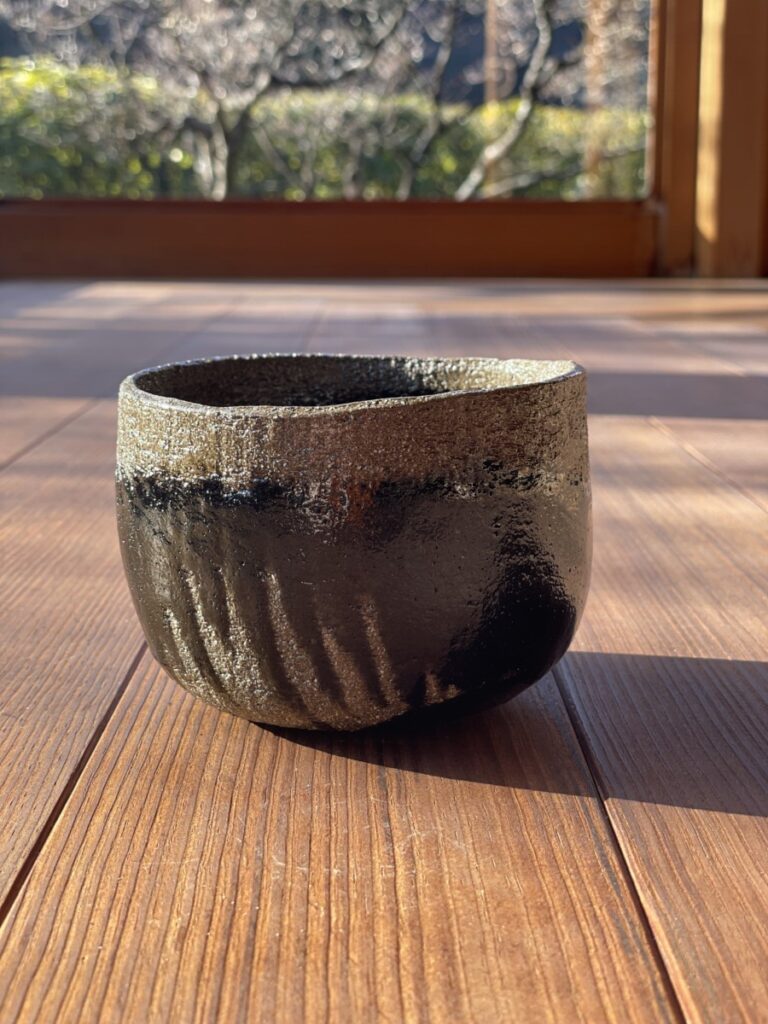
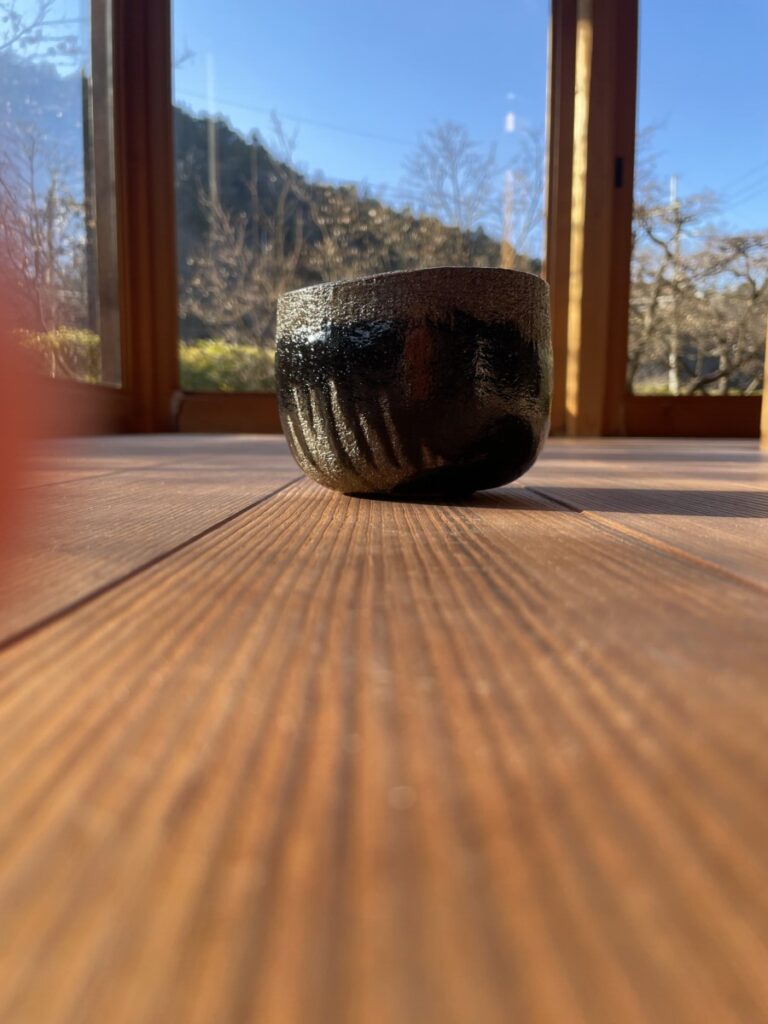
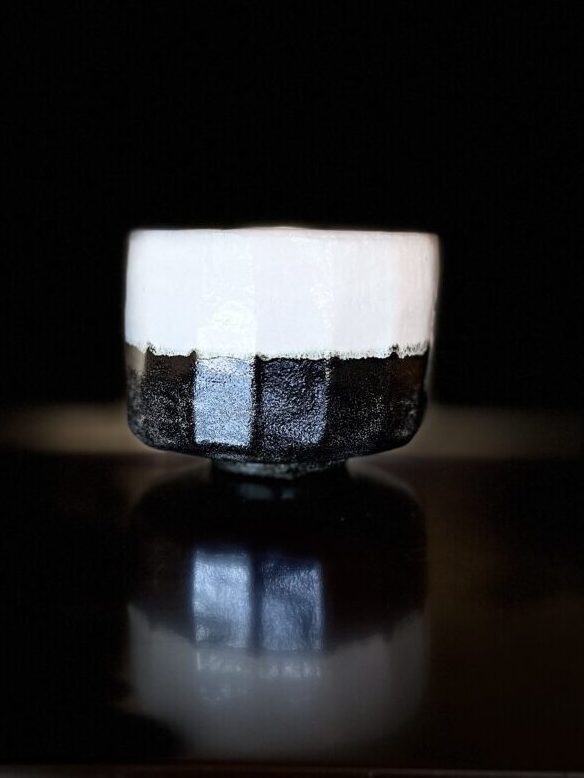
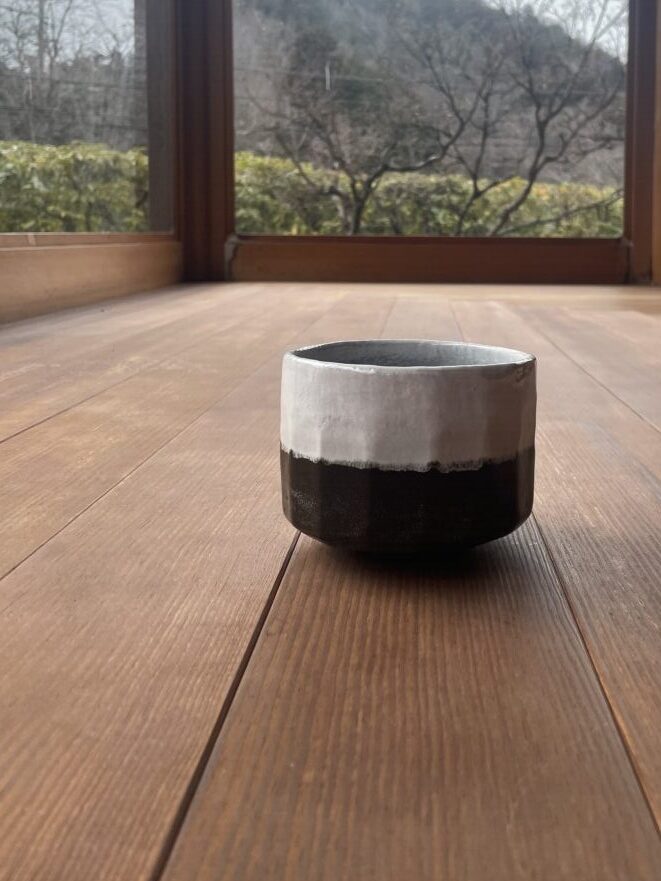
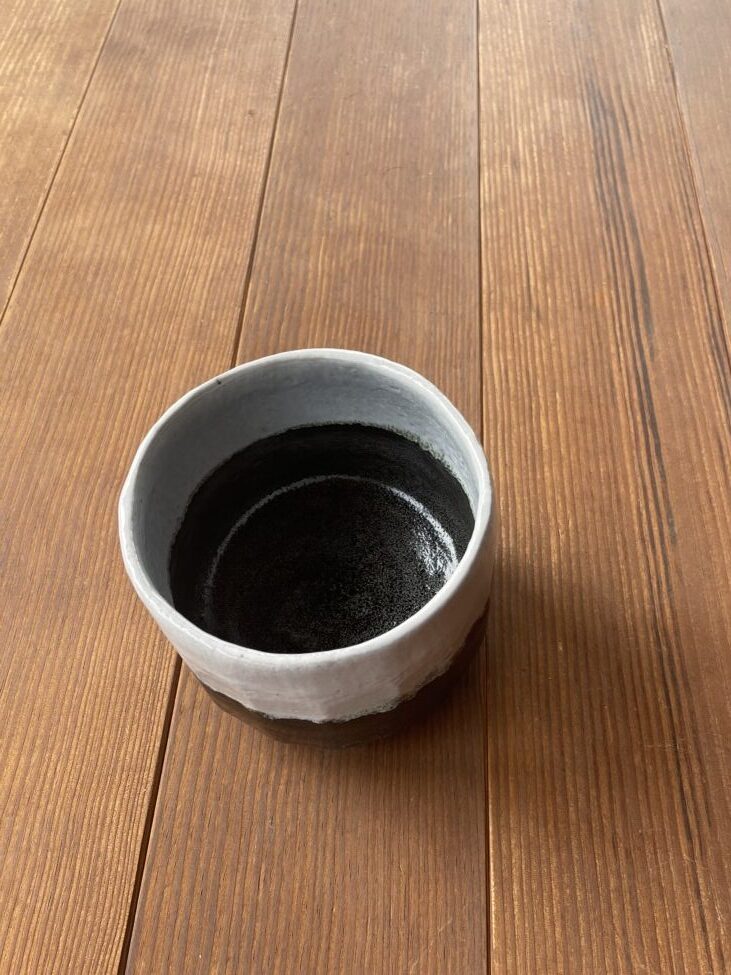
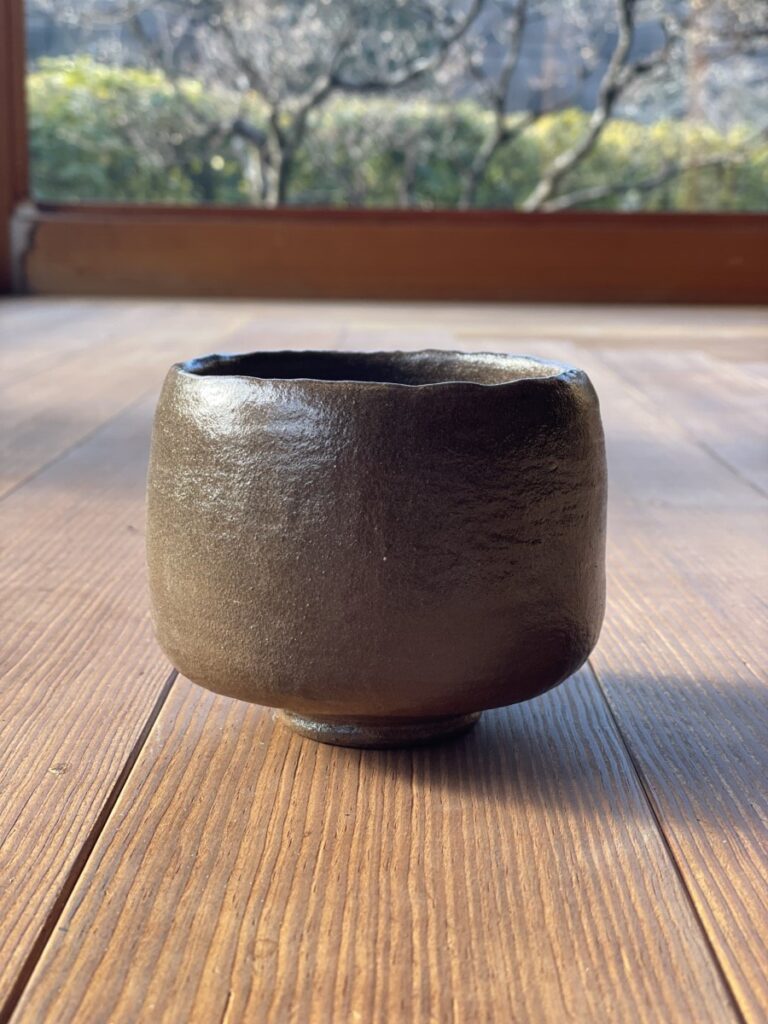
Utsushi is not the act of tracing form. It is a serious dialogue— a direct confrontation undertaken with profound respect for those who came before, and an attempt to touch their thought and their silence. Standing before the questions left by Rikyū, this practice engages with an aesthetic sensibility that continues to live beyond four hundred years of time. What is carried over is not shape, but the traces of thought— pared down, chosen, and left behind. This bowl does not recreate the past. It is utsushi— a means of keeping the question alive in the present moment.